
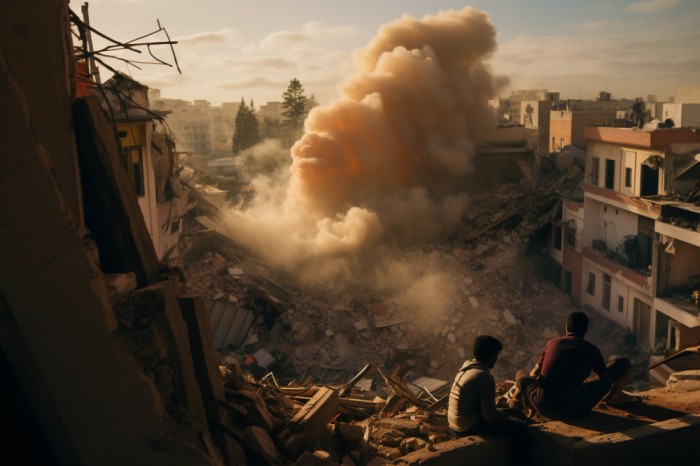
Escalating tensions between the United States and Iran have sparked fears of a broader conflict in the Gulf region, following recent military exchanges. The United States launched strikes targeting Iranian assets, including air defense systems, drone facilities, and surveillance structures, in retaliation to an attack on a commercial vessel situated in the strategic Strait of Hormuz. US military officials stated that these actions were necessary to counteract threats from Iran in this crucial waterway.
In response, Iran’s Islamic Revolutionary Guard Corps claimed responsibility for missile and drone strikes directed at US-affiliated military sites in Kuwait and Bahrain. Among the targets, they reported hits on a US air base in Kuwait and a naval facility in Bahrain, although these claims have yet to be independently verified. The governments of Kuwait and Bahrain subsequently issued security warnings as their defense systems detected incoming missiles and drones, advising residents to seek safety.
The recent exchange of hostilities has heightened concerns about the stability of the fragile ceasefire between Washington and Tehran. This development follows previous US military actions against Iranian sites amid ongoing tensions surrounding the Strait of Hormuz, a pivotal channel for global energy transport that has become a focal point of US-Iranian disputes.
President Donald Trump accused Iran of breaching the ceasefire agreement, warning that the US might take further military action if hostilities persist. Meanwhile, Iran has pointed the finger at Washington, accusing it of escalating the situation and violating earlier agreements.