
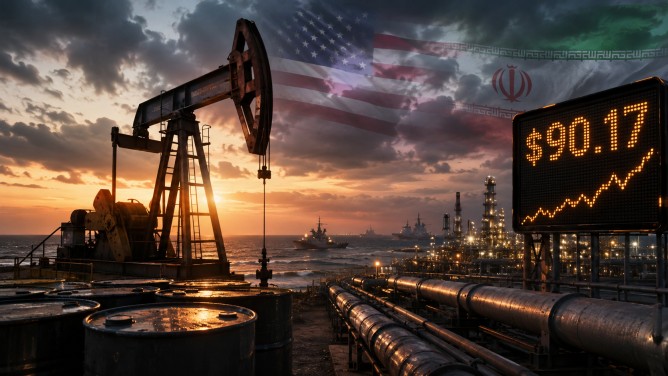
Oil prices have surged as the deadline for talks between the United States and Iran passed without reaching a peace agreement, sparking concerns about ongoing conflict and its potential impact on global energy supplies. Brent crude prices climbed to over $90 a barrel, hitting $91.63, a peak not seen since July 30. This increase follows President Donald Trump’s demand for Iran’s surrender and his warning of possible escalation if diplomatic resolutions continue to be elusive.
The Strait of Hormuz, a vital conduit for global oil shipments, is also under increased scrutiny. A significant drop in the number of commercial vessels navigating this critical waterway has heightened fears of extended disruptions to oil supplies. The geopolitical tension in this area is further aggravated by reports of an attack on a cargo vessel transiting the strait, raising alarms about the safety of maritime operations in this region.
Amidst the failure of negotiations, Iran has hinted at adopting a more assertive military posture, which could exacerbate already strained relations and further destabilize the region. This potential for increased aggression underscores the risk of continuous interruptions in oil transportation, compelling investors to brace for a prolonged period of supply disruptions.
Any extended closure or reduced flow through the Strait of Hormuz could exacerbate the upward pressure on crude oil prices. Analysts caution that the persistent conflict in the Middle East, when combined with the ongoing war in Ukraine, could trigger additional shocks to global energy markets, potentially driving oil and gas prices even higher.