
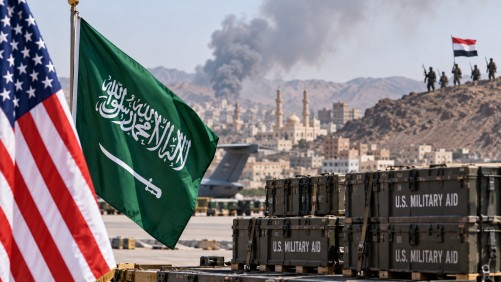
The United States has opted against providing direct military support to Saudi Arabia amidst growing tensions along Yemen’s western coast, where Houthi forces are extending their control. This decision follows recent talks between U.S. officials and Houthi representatives in Oman, where assurances were made that a ceasefire arrangement set for 2025 remains in place, with no intentions to target American or international shipping in the Red Sea.
Despite these assurances, Saudi-linked vessels remain potential targets due to Riyadh’s involvement in the ongoing Yemen conflict. The expansion of Houthi forces along the western coast of Yemen has raised concerns about the security of the Bab al-Mandab Strait, a critical artery for global trade connecting the Red Sea to the Gulf of Aden.
As the U.S. continues to communicate directly with the Houthis, it has refrained from intervening militarily on behalf of Saudi Arabia, leaving the kingdom to either pursue negotiations with the Houthis or seek additional support from regional allies. This strategic choice by the U.S. places increased pressure on Saudi Arabia to navigate the evolving conflict landscape independently.
Further complicating matters, Saudi authorities have reported intercepting a drone attack near Mecca, allegedly launched by Houthi forces. The Houthis, however, have denied any involvement in targeting the holy city. This incident underscores the ongoing volatility in the region and the potential threats to major religious and strategic sites.
The developments have heightened global concerns regarding the security of shipping routes through the Red Sea and the broader implications for regional stability and international trade. As the situation unfolds, the focus remains on diplomatic efforts and the potential for escalated conflict affecting global economic interests.