
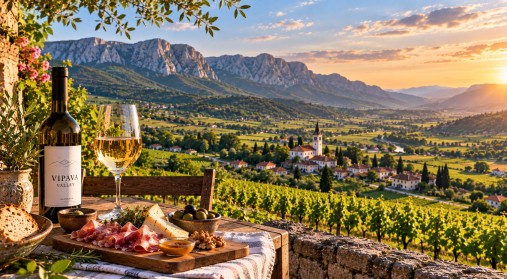
In the southwest of Slovenia, the Vipava Valley offers a serene retreat filled with vineyards, mountains, and rich agricultural traditions, away from the country’s more crowded tourist spots. Situated about an hour from Ljubljana and close to the Italian border, this region is defined by the Vipava River, expansive agricultural plains, and steep karst hills adorned with vineyards and forests. A significant factor shaping the valley’s unique environment is the burja, a strong seasonal wind from the Alpine region. This wind, coupled with dry conditions and karst soil, has fostered a distinctive culture of farming and winemaking.
Wine is central to the local economy and tourism, with vineyards sprawling across the valley’s slopes. Visitors can explore small wineries and estates to discover regional wine varieties and traditional production techniques. The local cuisine, another draw for tourists, features mature cheeses, fresh goat and sheep products, cured meats, vegetables, herbs, and classic Slovenian dishes. Many restaurants and farm-based dining spots highlight locally sourced ingredients in their offerings.
The valley’s charm extends to its villages, where old farmhouses and agricultural structures are being renovated into accommodations, preserving traditional architecture while boosting local tourism. This development approach supports a tourism model focused on smaller accommodation providers, farms, wineries, and activity operators, maintaining the region’s rural character and providing visitors with an authentic experience.
Nature lovers will find plenty to explore, with cycling routes linking vineyards and villages, and walking trails leading into the surrounding hills. The diverse terrain also accommodates activities like paragliding. For those interested in history, the Roman heritage of Ajdovščina and the historic streets of Vipavski Križ offer enriching explorations. Additionally, the area around Nova Gorica provides insight into the unique cultural landscape shaped by the Slovenian-Italian border.
With its blend of culinary delights, wine culture, natural beauty, and historical sites, the Vipava Valley is emerging as a promising destination for travelers seeking a quieter alternative to Slovenia’s more popular tourist areas.