
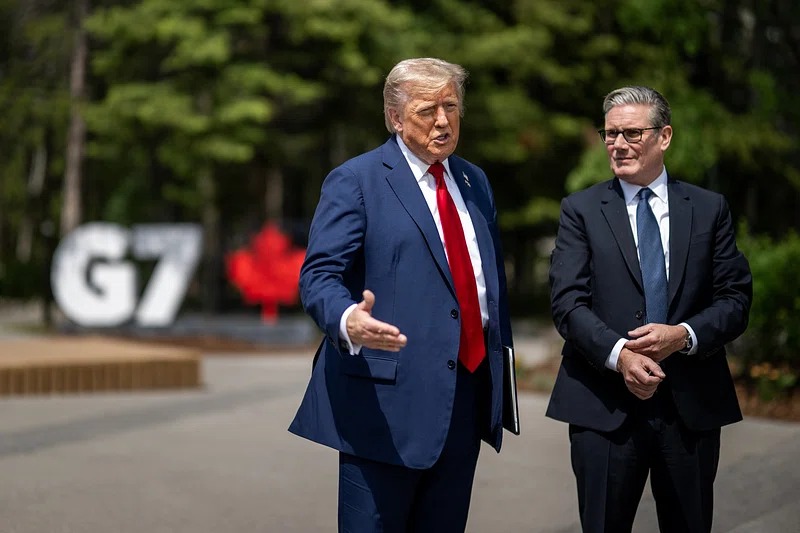
The Iran conflict has done more than reshape the military situation in the Middle East — it has redrawn the map of what the United States expects from its allies, and the consequences for countries that fail to meet those expectations. Britain’s experience is the most visible illustration of a broader shift.
The American administration has made clear, through both the president’s social media posts and the secretary of state’s conference remarks, that it regards allied support for American military operations as an obligation rather than a discretionary choice. Countries that treat it as the latter — as something to be weighed against domestic political considerations — will face consequences.
Britain’s initial refusal to grant basing rights for operations against Iran placed it in that category — at least temporarily. The president’s public criticism and the secretary of state’s pointed distinctions between reliable and unreliable allies were the consequences. They were immediate, visible, and damaging.
The reversal that followed — limited, defensive, framed in terms of British self-interest — demonstrated the limits of Britain’s ability to sustain a position of non-cooperation under sustained American pressure. The cooperation it eventually offered was genuine but insufficient to fully repair the damage.
For allied governments elsewhere watching the episode, the new map of American expectations was becoming clearer. Standing aside — even for principled domestic reasons — now carried a diplomatic cost that was higher and more public than it had been in previous administrations. Adjusting to that reality was a challenge that many allied governments were only beginning to confront.